vineyard sites
VINEYARD SITES // heat. microclimate.
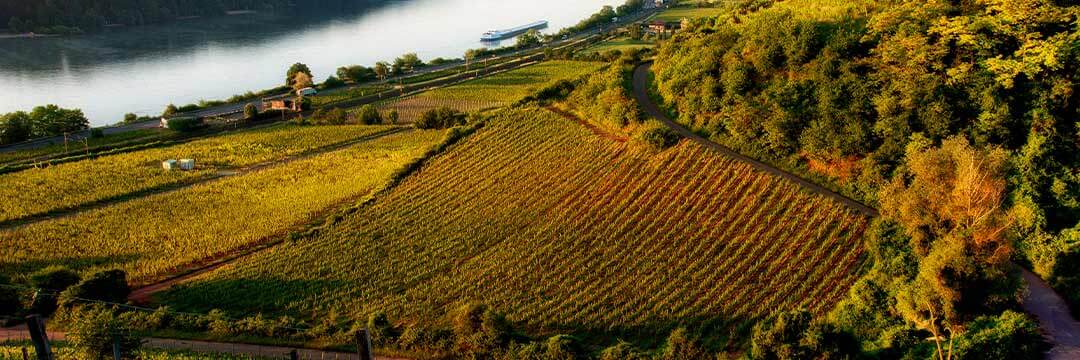
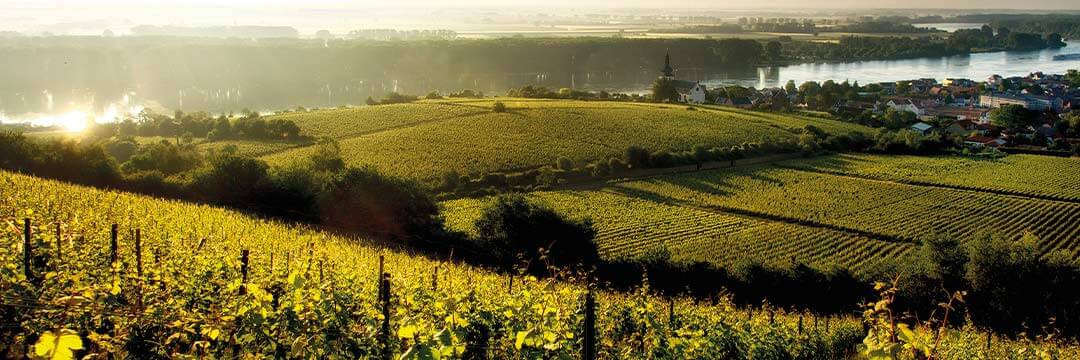
Every vineyard on the Roter Hang has its own microclimate. Near the Rhine, the water’s surface acts like a giant mirror, doubling the sunlight reaching the slope. Exposed and sheltered sites alternate around the gullies, while the red soil shows very different degrees of weathering. In some places, bare rock reaches the surface; elsewhere it has broken down into fine clay and slate-like fragments. All the sites can become warm. On hot summer days, the air shimmers above the red rock. When rain follows, the entire hillside smells of slate as the soil cools again.
TIME & AGE // The making of wine
Everything takes time. A year for a new vintage; at least 100 days from flowering to ripe grapes; weeks from must to wine; years from youthful wine to mature grandee. Nierstein Riesling is the diva among white wines: unique, outstanding and full of potential. It often only begins to reveal its full character two years after harvest, then develops over decades towards perfect harmony.
Pettenthal // noble. steep. hot.
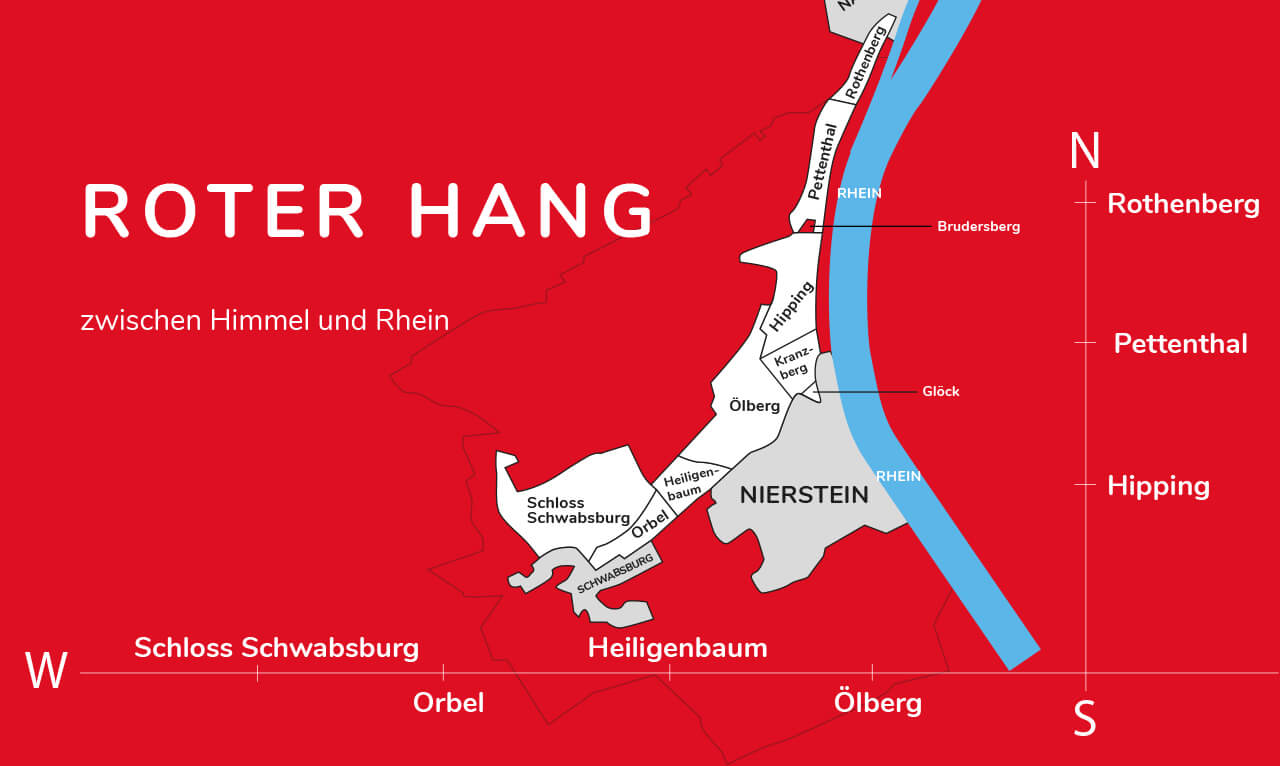
Pettenthal is the steepest part of the Roter Hang. No Nierstein vineyard site is better known or more sought after. Its soil is particularly poor and rocky. The slope curves through 180 degrees around the Brudersberg, receiving sunlight throughout the day. Pettenthal appears as a cadastral name as early as 1753. It probably refers to the migrations of toads, known locally as “Petten”, observed here on their way to springs and marshy pools higher up the hillside. An adjoining area is called “Stumpe Loch”, derived from the word for a swampy hollow.

Hipping // fine. weathered.
The name is documented in 1753 as vineyard property belonging to the Geismar, Haxthausen and Harstall estates. Its origin remains unclear. On the slope, bedrock lies roughly a metre below the surface; at its foot, centuries of erosion have deposited a layer of fine red earth five to eight metres deep. The east-facing aspect brings early warmth each day, while the soil retains heat well. Together with the nearby Rhine’s heat-storing effect and shelter from the prevailing westerly winds, this creates an excellent microclimate, ideally suited to Riesling. Hipping has two faces: one looks east, the other stands steeply in the southern midday heat. Its soil is more finely weathered than Pettenthal’s.
Ölberg // deep. powerful. fruity.
The name appears in nineteenth-century title deeds and is listed as a field name in the town chronicle of 1928. Its biblical associations and the ripe, full-bodied, often almost oily character of its wines probably helped establish it as a vineyard name. Today’s Oelberg site encompasses 15 former vineyard parcels.
Orbel // powerful. full-bodied.
Over the centuries, “Orbel” developed from the original “Ölbel”, meaning a strong, stocky fellow. The name thus refers to the rich, full-bodied wines typical of this vineyard site.
Schloss Schwabsburg // majestic. pure. sensitive.
Schloss Schwabsburg adjoins Orbel to the west, covering the crest and plateau of the Roter Hang. Its heavily eroded soils are stony and shallow, with roots reaching deep into fissures in the red bedrock. Schloss Schwabsburg wines are lively, taut and concentrated, with the Roter Hang’s characteristic minerality.
Rehbach // intense.
The name has been recorded since the eighteenth century. It probably developed from “Rodebach”, an old name for the local stream, referring to the intensely red water it carried after thunderstorms, which coloured the Rhine’s left bank as far as beyond Bingen. The Rehbach collective vineyard area comprises Pettenthal, Brudersberg and Hipping.
Nackenheimer Rothenberg // exceptional. precious.
The vineyards facing the Rhine between Nackenheim and Nierstein have achieved international fame as Rheinhessen’s Roter Hang. In the north, this exceptional succession of prized vineyard sites begins with Rothenberg.